SPONSORED BY: Softing Industrial Automation
Licensing Strategy in Long-Term OPC UA-Architectures
In industrial automation, production systems commonly operate for 15–20 years or longer. OPC-based connectivity infrastructures often follow the same lifecycle. Once implemented, they become a central component of data exchange between control systems, edge devices, and enterprise IT.
While architectural discussions typically focus on interoperability, cybersecurity, and performance, the licensing model of connectivity software also has long-term operational and economic implications.
Licensing as a Strategic Consideration
OPC infrastructures connect:
- PLCs, CNCs, and legacy systems
- OPC UA and MQTT environments
- Edge devices and cloud platforms
- Production networks and enterprise IT
These systems are designed for durability and continuous operation. Over multi-year horizons, licensing structures influence:
- Total Cost of Ownership (TCO)
- Budget planning and financial predictability
- Investment protection
- Expansion and modernization strategies
For long-running industrial environments, alignment between system lifecycle and licensing model becomes an important planning factor.
Perpetual and Subscription Models in Practice
Industrial connectivity software is typically offered under perpetual or subscription-based licensing models.
Perpetual licensing is often associated with:
- One-time investment structures
- Long-term usage rights
- CAPEX-oriented budgeting
- Stable cost predictability over extended periods
Subscription models are frequently linked to:
- OPEX-based financial planning
- Flexible scalability
- Incremental project rollouts
- Adaptability in dynamic or distributed environments
Both approaches can be appropriate depending on the operational context and modernization roadmap.
Flexibility in Licensing Approaches
In environments with long machine lifecycles and stable infrastructures, predictable long-term cost structures may be a priority. In more dynamic architectures, scalable subscription models can provide flexibility.
From a strategic perspective, offering a choice between licensing models allows organizations to align commercial structures with technical architecture decisions.
Softing Industrial Connectivity Solutions
Softing Industrial Automation provides OPC-UA-based connectivity solutions designed for long-term industrial use cases.
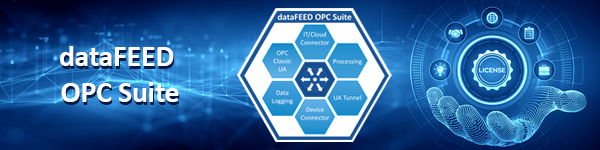
dataFEED OPC Suite
A software solution for reliable OT–IT integration in heterogeneous automation environments:
- OPC UA and OPC Classic communication
- Integration of PLCs, CNCs, and legacy systems
- Secure data transfer to IT and cloud platforms
- Designed for Windows-based infrastructures
- Available as a perpetual license
This approach supports stable installations where long-term cost transparency is required.
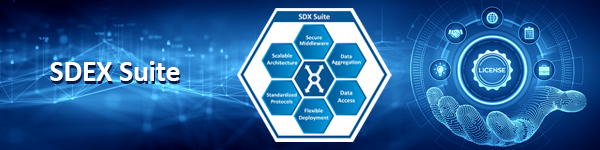
SDEX Suite
A scalable connectivity platform for modern OT–IT architectures:
- Support for OPC UA and MQTT
- Deployable on Windows
- Container-ready (Docker)
- Available as hardware gateway
- Licensable as perpetual or subscription
The availability of both licensing models enables alignment with different deployment and business strategies.
Conclusion
As OPC technologies continue to serve as a foundation for interoperable industrial communication, licensing strategy forms part of broader architectural planning.
Selecting a licensing model that reflects system lifetime, expansion plans, and financial structures contributes to sustainable and future-ready OPC infrastructures.
Learn more about Softing’s licensing options and connectivity solutions.